Ullswater has an advantage most of the Lake District's big lakes don't: a bus that runs the length of one shore and a passenger boat that covers the same ground on the water. Put the two together and you've got a genuine car-free day out — train to Penrith, bus down the valley, a few miles of shoreline on foot, and a boat back to where you started. Here's how to make it work, including the timings that actually matter.
Penrith North Lakes sits on the West Coast Main Line, with direct trains from London, Birmingham, Manchester, Glasgow and Edinburgh. The station is a mile or two outside the town centre, so budget for a short taxi ride or a local bus into Penrith bus station, which is where the Ullswater service picks up.
From there, the 508 runs south to Patterdale, calling at Pooley Bridge, Watermillock, Aira Force and Glenridding on the way. It's a normal scheduled bus, not a tourist shuttle, which is exactly why it works: no booking, no queue, just turn up. Note that timetables shift with the seasons and Sunday services are thinner in winter — check the current Stagecoach timetable the week you travel, not the month before. If you're coming from Keswick, the Penrith bus connects at Penrith; from Windermere or Ambleside you'll generally be routed through Penrith too.
A day ticket covering the Cumbrian network is usually better value than two singles if you're making more than one journey. Ask the driver.
This is a proper journey in its own right, roughly three-quarters of an hour from Penrith to Glenridding. Once you leave Pooley Bridge and turn south, the road hugs the western shore, so sit on the left as you face forward and you'll have the water beside you most of the way.
Your options, in order:
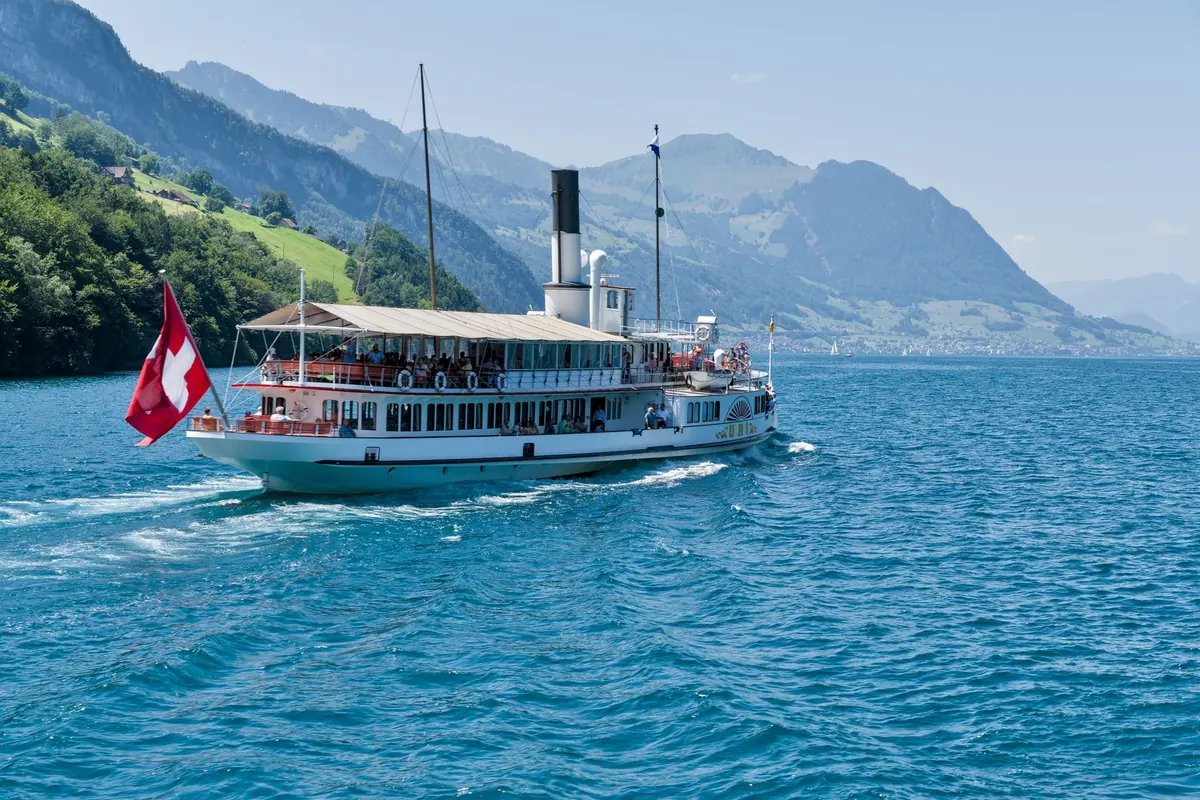
Ullswater Steamers runs the lake, calling at four piers: Pooley Bridge, Howtown, Aira Force and Glenridding. Despite the name, the boats themselves are modern motor vessels — the company name simply stuck.
Two things catch people out. First, not every sailing calls at every pier, and some of the smaller stops need to be requested, so read the timetable rather than assuming a boat every hour from wherever you happen to be standing. Second, the full run from Glenridding to Pooley Bridge takes the best part of an hour, which is longer than most people expect — enjoy it, but don't plan to be somewhere else five minutes later. You can buy tickets at the pier or online; on busy summer weekends, booking ahead saves standing around.
The classic car-free route is the shore path from Howtown to Glenridding, waymarked as part of the Ullswater Way. Take the boat from Glenridding down to Howtown, then walk back. It's roughly seven miles and a good four to five hours with stops — undulating rather than mountainous, with a few short steep pulls and a lot of rough, stony ground underfoot.
You start above the water at Howtown, drop down through woodland, follow the shore past Sandwick and Side Farm into Patterdale, then finish on the flat mile into Glenridding. The views back up the lake toward Place Fell and the Helvellyn range do most of the work for you.
Check the time of the last boat and the last bus, then give yourself at least an hour of slack. There are very few places to bail out once you're on the path, and phone signal along the shore is patchy at best. Proper walking shoes rather than trainers, and a waterproof even on a promising forecast.
If seven miles sounds like too much, two easier combinations work well. Ride the bus to Aira Force, walk up to the waterfall — a steady twenty-minute climb on a National Trust path — then follow the shore south to Glenridding, which takes a couple of hours at an unhurried pace. Or keep it very simple: sail from Glenridding to Howtown and straight back, then walk the flat mile and a half to Patterdale for lunch and pick up the bus there. Both give you the lake from the water and from the shore without committing to a full day on your feet.
Everything hinges on two timetables — the 508 and the Steamers — so screenshot both before you leave, and check them again on the morning of travel. Winter means short daylight hours, and the last sailings and buses come earlier than you'd think.
Take a waterproof jacket, a warm layer, water and something to eat; the stretch between Howtown and Glenridding has no shops and no shelter worth the name. Carry a card and a small amount of cash as backup. And if you're walking the shore path after heavy rain, expect mud and the odd slippery rock — the sections closest to the water can be slow going.
Get those two things right, the bus and the boat, and Ullswater opens up exactly as it should: from the deck, from the path, and without a car park in sight.
Photo: Jean-Paul Wettstein / Pexels